
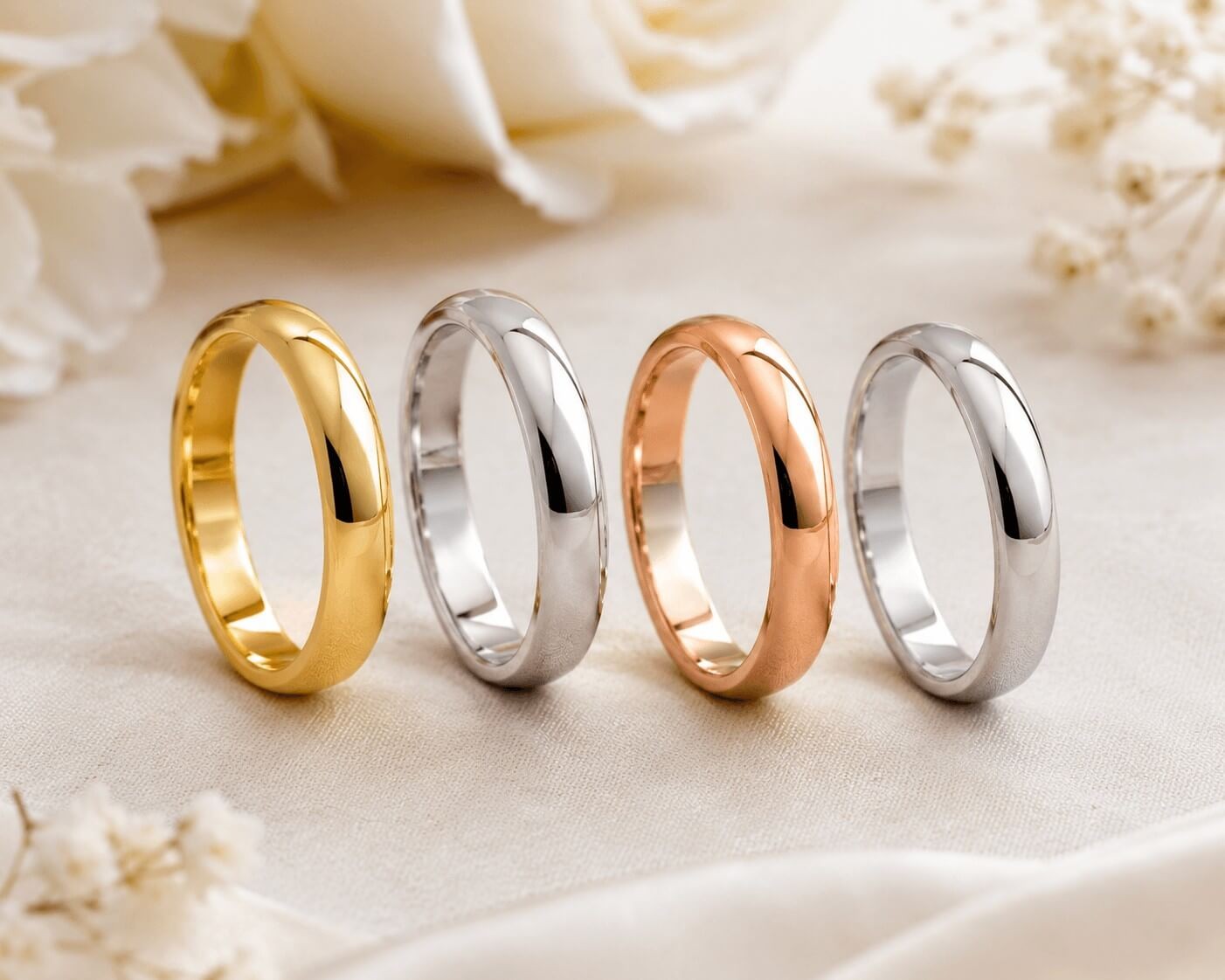
Your wedding ring is more than jewellery. It’s one of the pieces of jewellery that you will mean more than any other piece of jewellery that you will ever wear. It is even respected to such degree that in situations where jewellery is not allowed, the wedding ring is. It’s also one of the few pieces you’ll wear every single day.
Choosing the right wedding ring isn’t about following trends. It’s about finding something personal and suited to you and your lifestyle.
For many, buying wedding rings can feel overwhelming; there’s so much choice of metal, shape, style, finish and so on. There’s no ‘right’ answer, only the ring that feels right for you, is the right one.
This guide to help you with your journey.
Start With Your Lifestyle
Firstly, think about how your ring will fit into your everyday life. If you work with your hands, play sports regularly, prone to swelling or sensitive fingers, these will all effect your decision.
Metals
Platinum
A white metal and develops a soft patina over time that many people love.
Yellow Gold
Yellow gold wedding bands have been worn for generations and suit both traditional and contemporary designs.
White Gold
White gold has a white colour, a finish similar to platinum but often at a lower price point.
Rose Gold
This had a pinkish, copper colour and is often designed with over golds to highlight it’s colour.
Sterling Silver
This is a white metal, it can tarnish over time but is easy to clean with a silver cloth or dip. This can be a cost efective way of having a wedding ring and looks great.
Shape
The shape or ‘profile’ refers to the shape of the ring when viewed from the side. It may sound like a small detail, but it makes a huge difference to comfort and style.
Court Shape
The classic comfort-fit wedding ring. Rounded inside and outside for a smooth feel.
Flat Court
A more modern profile with a flat exterior and comfortable curved interior.
D-Shape
Traditional and timeless, with a rounded outer edge and flat inside.
Flat Profile
Minimalist and contemporary with sharp, clean lines.
Try on as many different styles in person before making a decision. Many people are surprised by how different each style feels once worn.
Should Wedding Rings Match?
One of the most common questions couples ask is whether wedding rings need to match.
The simple answer is no. These are your rings, for your life, to represent your feelings. Many people with give you their opinion of what ‘You should wear’ but it’s YOUR choice.
How to Choose a Wedding Ring That Fits Your Engagement Ring
If you already wear an engagement ring, you may want your wedding ring complement it.
Things to Consider:
- Does the wedding ring sit flush against the engagement ring?
- Would a shaped or curved band work better?
- Do the metals match well together?
- Are the widths balanced visually?
Low-set engagement rings often require shaped or contoured wedding bands for a comfortable fit. A professional jeweller can help you create a bespoke wedding ring that follows the exact shape of your engagement ring for a seamless finish.
However, if the engagement ring has a design that is ‘flat’ or even all the way around, this opens up your choices and virtually all wedding bands will fit.
Wedding Ring Width Guide
Ring width changes the overall appearance and feel of the band. While you can commission a bespoke ring, most standard rings come in the below widths.
- 2mm
- 3mm
- 4mm
- 5mm
- 6mm
There’s no rulebook here. Slim hands may suit wider bands beautifully, while some people prefer lightweight minimal styles. The most important thing is comfort.
Don’t Forget Ring Sizing
Finger size changes throughout the day and throughout the year.
For the most accurate fit:
- Try rings in the afternoon or evening
- Avoid measuring when your hands are cold
- Remember fingers can swell slightly in warm weather
- Wider bands may require a slightly larger size
Professional sizing is always recommended before ordering. Also, light weighing scales, different ring sizers can give different results. For best results have a ring that fits and take it with you. If ordering online and you don’t have a ring that fits you, invest in a ringer sizer. This way you can tell the jewellery the internal diameter as well as the size. This can minimise mistakes.
Finishes and Decorations
The finish affects how your ring reflects light and wears over time.
Polished Finish
Bright, reflective and classic.
Matt Finish
Soft matt look.
Hammered / Planished Finish
Textured and artisan-inspired. This is a beaten look but also give a shine with light.
Combination
You don’t have to pick just one. For example, you could have a polished finish with matt dots or you could have a silver ring with a gold swirl. The choices are endless.
Stones
Some people choose to have stones set in to the ring. This opens an entire world of more choice. However, remember that rings move around, so if you have a few stones on the ‘front,’ they will probably work their way around to the back of the finger, so you’ll be spending your days turning them back to the front. If you want stones, an eternity-style, where the stones go all the ways around may be easier for you.
How Much Should You Spend on Wedding Rings?
There’s no perfect budget.
Some couples spend a few pounds, while others invest several thousand on bespoke designs. Don’t let others tell you what to do, this is a meaningful, sentimental piece, it’s what you want. It’s the meaning and not the money spent that matters.
A wedding ring is designed to last decades; it’s worth choosing something you genuinely love.