
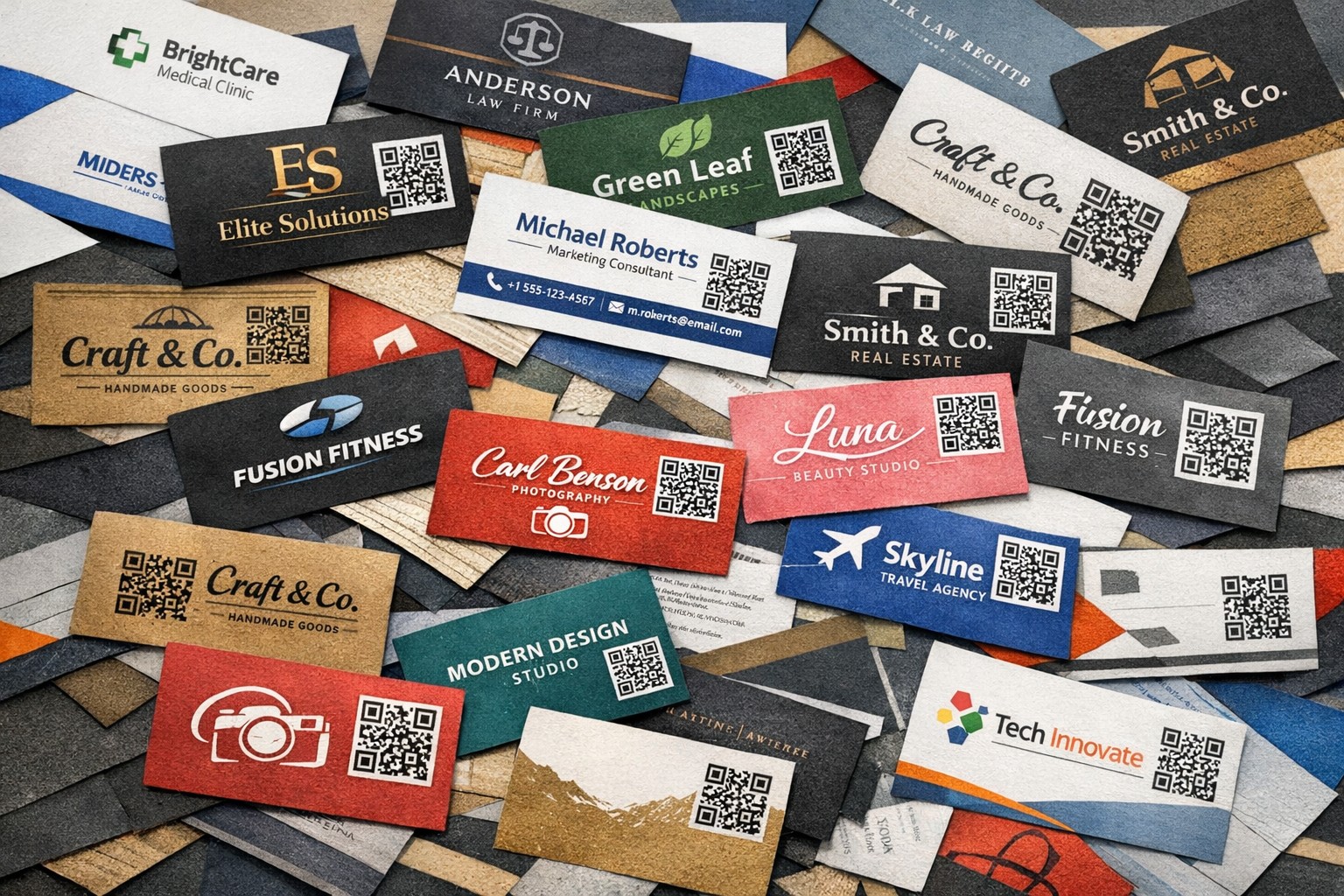
Many people have stopped using business cards and have replaced them with QR codes on their phones or fancy acrylic tabletop signs. I think this is a big mistake and short-sighted. In my 20+ years in business, I have gained experience and knowledge. Below is what I have learned on the matter.
By not having business cards, you are:
- Preventing people from processing your information in their own way.
- Preventing your information from being easily passed on.
- Preventing people from keeping hold of your information.
- Preventing them from having a visual memory of your information. This is another way for you to be remembered.
- Preventing people from easily contacting you in the way they want to. E.g., your potential customer wants to email you, so they have to scan the QR code, find your email address, and then copy and paste or forward it so they can email you. Too much of a hassle. We all know if it’s a hassle, people don’t follow through and give up.
- Preventing you from giving out your contact details and business information easily and quickly.
Of course, just having a business card , any business card, doesn’t work either. All of the below may sound ridiculous, but I have received many of these cards. I have been given:
- Cards with just a QR code on them.
- Cards that have no name on them.
- Cards that don’t say what the business is.
These are a waste of time, money, and ink. These sorts of cards are missing so much vital information. A business card is your calling card, a point of contact—don’t waste it. Believe me, I have received many business cards that are guilty of the above.
In my opinion, business cards are incredibly important, but a good business card is vital. Below are my top 10 tips for what makes a brilliant, memorable business card. I have accumulated this knowledge through experience, interactions, and over 20 years in business.
- Have a nice-feeling card – We are sensory beings. A cheap or flimsy card gives a cheap impression and subconsciously makes the recipient feel your business is of poor quality.
- Original imagery – Your business is special and unique. Don’t use images that a thousand other people have used. Again, it gives a bad impression and shows you don’t know your business.
- Make your information clear and easy to read – Don’t make it hard for potential clients to contact you. Too hard, and they won’t bother. Also, if the information is too small or hard to read, there will be mistakes, so emails or texts may not be received.
- Make your card memorable – In a good way, of course. Use a powerful image, striking colours, or a strong logo. This way, you and your card will be recognised at a glance.
- Add a QR code – We all process information in different ways. By having your contact information and a QR code, your clients can contact you or look into your business in a way that works for them.
- Put YOUR NAME on your card – Not many people are going to remember your name and will be too embarrassed to ask later. With no name, you are increasing the odds that your card will be “lost.”
- Business name – Make sure your business name is clear and readable.
- Business description – You can fit about 10 words on a card. Use that space to give people a brief description of your business. Don’t assume people will remember or look you up without being inspired to do so.
- No blanks – Use both sides of your business card. Don’t waste that valuable space. You can use it for information, imagery, a quote that represents your philosophy, or even put: “I met (your name) on date _______ at event ____________.” Whatever you do, don’t leave it blank.
- This is YOUR business card, representing YOUR business. Make sure it truly represents you and what you do.
I hope you find these tips helpful. This is from my years of experience, but find your own way of working. No one can tell you the right way—just what they have found works for them.
Stay Fabulous